


Footfall Monitoring in National Parks Without Power or Internet
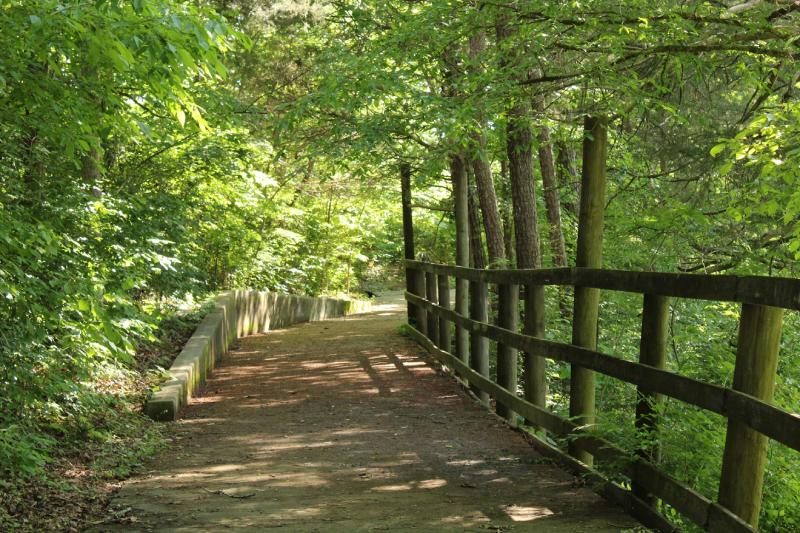
Monitor visitor traffic across remote trails and park entrances without electricity or fixed internet using battery-powered infrared counters or solar 4G radar.
Park rangers, forestry departments, and municipal recreation teams rely on accurate visitor counts to justify maintenance budgets, protect sensitive habitats, and apply for tourism grants. Yet most trailheads, boardwalks, and nature reserve entrances have neither grid electricity nor fixed broadband.
Running power trenches or fiber cables through protected landscapes is rarely practical. Instead, outdoor teams can choose between two proven off-grid approaches: battery-powered infrared beam counters for standalone manual collection, or solar-powered 60 GHz mmWave radar with built-in 4G LTE for live remote reporting.
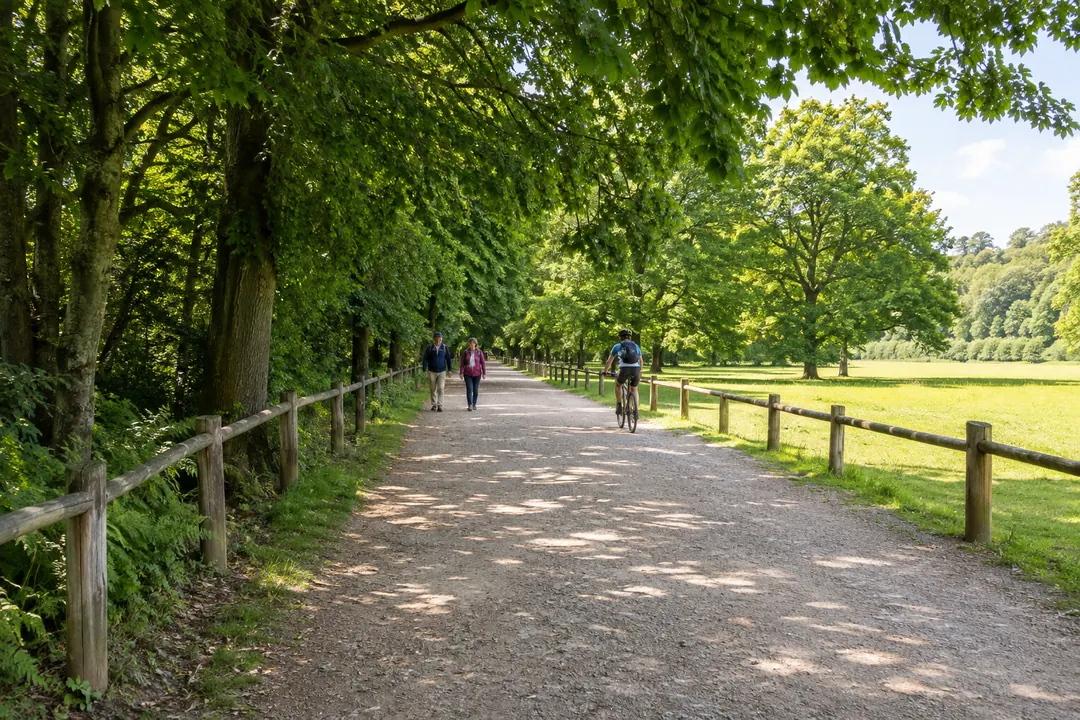
Battery-Powered Infrared Counters for Narrow Trails and Gates
When a remote footpath or park gate has no mobile signal or requires minimal roadside hardware, standalone infrared counters keep installation simple. These compact, weather-sealed units mount on wooden posts, trees, or fences and run on batteries for up to 2 years, with industrial lithium cells recommended for freezing winter climates.
- Total crossings with SensMax SE: The SensMax SE outdoor people counting sensor counts every beam interruption across a narrow path, making it well suited for single-track forest trails, footbridges, and scenic viewpoints.
- Directional IN/OUT tracking with SensMax DE: The SensMax DE bidirectional outdoor sensor adds dual-beam direction logic to separate arriving and departing visitors at park gates, loop trails, and visitor centers.
- Offline memory and field collection: Both models store timestamped hourly counts internally, so staff only need to walk past with a portable data collector during routine maintenance rounds and upload the logs to reporting software back at the office.
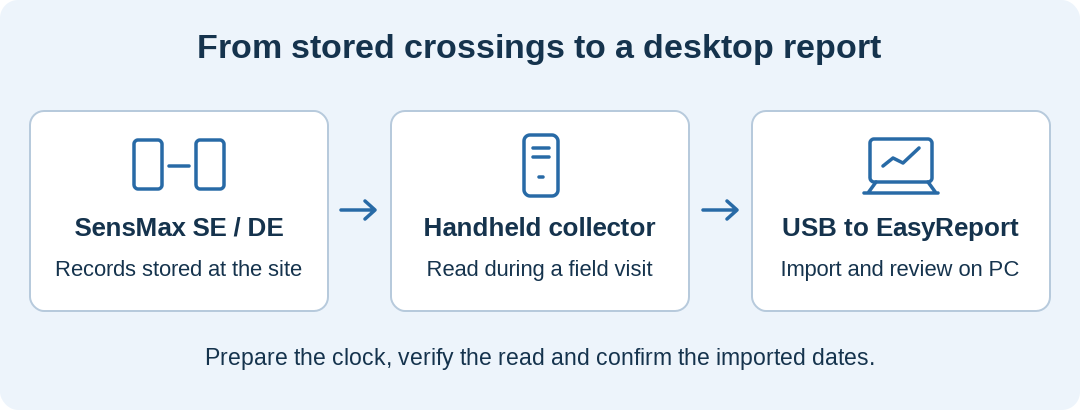
Solar-Powered 60 GHz Radar for Live Remote Monitoring and Multi-Use Trails
Wide gravel paths, multi-use cycling corridors, and distant trailheads often demand more than periodic manual readouts. For these locations, pairing the SensMax TAC-B 4G outdoor radar sensor with the SensMax SPS20 solar power system creates an autonomous, real-time monitoring station.
Unlike optical beams, a 60 GHz mmWave radar requires no opposite-side reflector and mounts on a single post or wall up to 6 m high with a 0-45 degree downward tilt and zero blind spot directly underneath. The built-in 4G LTE modem transmits live statistics to the cloud or your own platform via bidirectional SensMax MQTT v2.0, while supporting remote diagnostics and over-the-air firmware updates.
- Pedestrian and cyclist separation: On side-mounted trail installations, the radar distinguishes walkers from cyclists and scooter riders so parks can manage shared-path safety and wear.
- Spatial analytics beyond doorways: In open areas up to 10x10 m, teams can track directional IN/OUT lines, 5-minute Total Flow across crossroads, Engagement and Capture Rate near trailhead information boards, and Hourly Heatmaps.
- Consistent field orientation: Mounting Azimuth settings (0-359 degrees across 8 compass directions) align trail junction reports accurately, while technicians configure zones on site using the included SensMax Prism app.
Comparing Off-Grid Visitor Counting Options
Choosing between infrared beam counters and solar-powered radar depends on path width, how often rangers visit the site, and whether you need live traffic alerts or multi-modal counts.
| Feature | SensMax SE | SensMax DE | SensMax TAC-B 4G + SPS20 |
|---|---|---|---|
| Direction Detection | Total crossings only | Bidirectional (IN/OUT) | Bidirectional IN/OUT plus 5-min Total Flow |
| Detection Method | Single infrared beam | Dual infrared beam | 60 GHz 3D mmWave radar (up to 10x10 m) |
| Power Source | Internal batteries (up to 2 years) | Internal batteries | SPS20 solar panel with battery backup |
| Data Retrieval | Offline via portable data collector | Offline via portable data collector | Live remote upload via built-in 4G LTE |
| Best Use Case | Narrow hiking trails and footbridges | Park gates and loop trail entrances | Wide trails, bike paths, and live remote sites |

Practical Site Selection and Mounting Tips
Field reliability in national parks depends heavily on matching sensor placement to seasonal weather and vegetation growth.
- Keep infrared paths clear: Mount SensMax SE and DE units on rigid posts or mature trees where tall grass, snowdrifts, or swaying branches will not block the beam.
- Position solar panels for open sky: When installing the SPS20 kit for TAC-B 4G, face the solar panel south in the Northern Hemisphere and avoid dense summer tree canopy that casts prolonged shade.
- Use elevation for wide coverage: Mount TAC-B 4G radar sensors up to 6 m high on poles or structures to monitor wide trails and keep hardware out of easy reach.
- Plan winter power margins: Specify industrial lithium batteries in offline sensors exposed to sub-zero temperatures to maintain steady autonomous runtime.
Key Takeaways
- National parks can monitor visitor traffic without grid power or Wi-Fi using either offline infrared counters or solar-powered 4G radar.
- SensMax SE (total crossings) and SensMax DE (IN/OUT) fit narrow trails and park entrances where rangers already conduct periodic site visits.
- SensMax TAC-B 4G with the SPS20 solar kit covers wide multi-use paths up to 10x10 m, separates pedestrians from cyclists, and delivers live 4G analytics.
- Both sensor families protect visitor privacy by collecting anonymous movement data without cameras or personal identifiers.
Frequently Asked Questions
Can outdoor counters run through winter without grid power?
Yes. SensMax SE and DE sensors operate autonomously on batteries, and switching to industrial lithium batteries helps preserve runtime in sub-zero weather. For continuous remote sites, the SPS20 solar system pairs a solar panel with battery backup to bridge shorter winter days.
How do rangers retrieve visitor data when there is no internet on site?
With SensMax SE and DE counters, hourly traffic logs stay inside the sensor until a staff member collects them wirelessly during a scheduled patrol using a portable data collector. If live remote access is required, the SensMax TAC-B 4G sends data directly over cellular networks.
Can one off-grid sensor separate hikers from cyclists on shared park paths?
Yes. When wall-mounted or pole-mounted along a shared trail, the SensMax TAC-B 4G mmWave radar classifies pedestrians separately from cyclists and scooter riders, while also reporting Total Flow, Engagement rates, and Hourly Heatmaps.
Do outdoor radar or infrared counters capture images or personal data?
No. Infrared beam sensors only log anonymous line crossings, and 60 GHz mmWave radar tracks motion vectors without optics, video recording, or MAC address scanning, supporting strict public-space privacy compliance.
Planning visitor counting across remote trails, park entrances, or nature reserves? Share your path widths, cellular coverage, and reporting goals in the inquiry form below, and our team will recommend a tailored off-grid SensMax configuration.
Ask your question
Tell us briefly about your project - our engineers will recommend the optimal configuration and send a quote.