Retail store | Wireless people counters


Wireless Infrared People Counting System for Retail Stores
The SensMax wireless infrared people counting system for retail stores provides accurate retail footfall counting and visitor counting at store entrances. With reliable traffic data, retailers can measure conversion by comparing store visits with POS transactions, optimize staff planning, evaluate marketing campaigns and benchmark performance across locations.
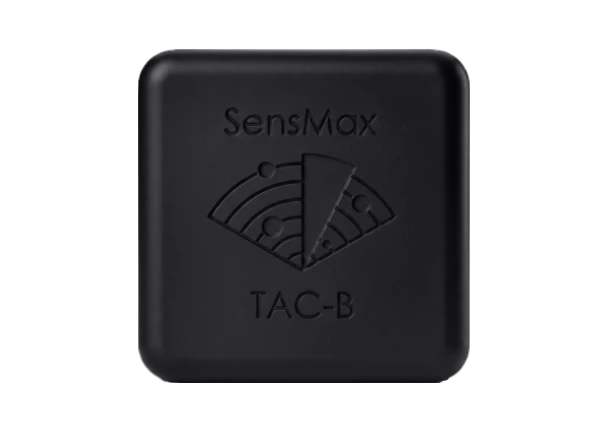
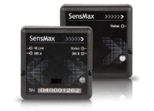
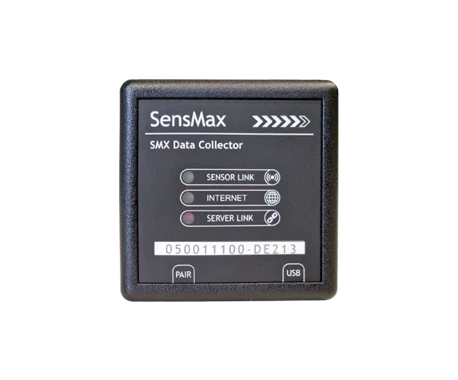
Battery-powered infrared people counting sensors such as SensMax S1 and SensMax D3 install without cabling and transmit data via SensMax SMX gateways to cloud or local reporting. The system is camera-free and counts anonymously, making it suitable for single stores and large retail chains.
.jpg)
Wireless visitor counting sensors are installed on both sides of a retail entrance.
Why Accurate Visitor Data Matters in Retail
Store traffic is the foundation for measuring retail performance. With retail people counting, managers can see peak hours, compare locations and quantify how campaigns, storefront changes or promotions impact visits and conversion.
- Conversion analytics – compare footfall with POS transactions to estimate conversion rate.
- Staff planning – align shifts with real peak hours and reduce idle coverage.
- Campaign measurement – evaluate whether marketing activities increased store visits.
- Store benchmarking – compare traffic across regions, formats and locations.
- Long-term trends – track seasons, holidays and recurring demand patterns.
How the Wireless Infrared People Counting System Works
Infrared sensors are mounted on opposite sides of the entrance at chest height. A transmitter and receiver create an invisible IR beam across the doorway. Each crossing is registered as a visit. SensMax D3 adds bidirectional IN/OUT detection for occupancy analytics and more detailed visitor flow understanding, while SensMax S1 counts total crossings.
Sensors transmit statistics wirelessly to the SensMax SMX gateway, which forwards data to the reporting platform. Communication ranges vary by model (up to 800 m). Each sensor includes internal backup memory that stores up to 25 days of hourly data if connectivity is temporarily unavailable.
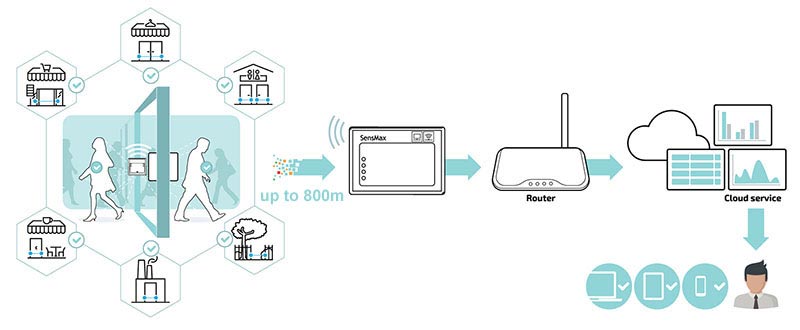
Wireless retail footfall sensors communicate with the gateway and automatically update the reporting platform.
Typical Retail Use Cases
- Entrance footfall counting – measure visits per hour, day, week and campaign period.
- Conversion measurement – compare visitor counts with POS transactions.
- Peak-hour staffing – plan cashiers and floor staff using traffic analytics.
- Store comparison – benchmark locations and detect underperforming stores early.
- Occupancy monitoring (optional) – use IN/OUT sensors to estimate occupancy trends.
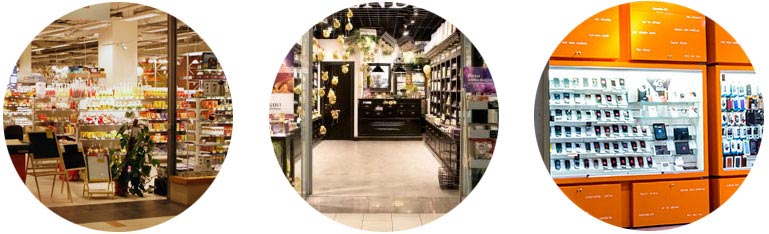
Wireless infrared visitor counting sensors for retail stores.
Key Advantages for Retail Stores
- Fast retrofit – no cabling required; install in minutes.
- Battery-powered – up to two years of operation on AA batteries.
- High accuracy – designed for narrow retail entrances and standard doors.
- Anonymous counting – camera-free footfall tracking at entrances.
- Offline backup – internal memory protects data during network outages.
- Scalable for chains – cost-effective rollout across many stores.
System Components
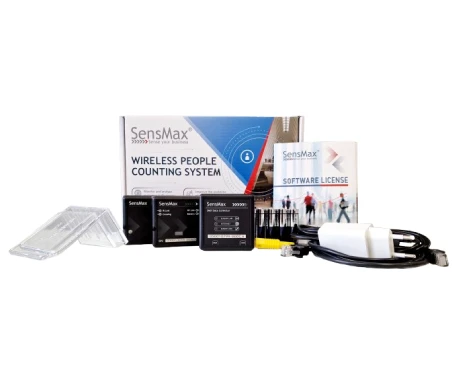
- SensMax S1 – unidirectional wireless infrared people counter.
- SensMax D3 – bidirectional wireless infrared people counting sensor (IN/OUT).
- SensMax D3 TS – real-time wireless IR people counter with 5-minute updates.
- SensMax SMX Gateways – LAN, Wi-Fi or long-range gateways for data delivery.
Reporting and Integration
Footfall statistics appear in the SensMax reporting platform with ready-to-use analytics such as hourly trends, daily summaries, store comparisons and long-term performance views. Retailers can use cloud reporting or install the software locally. For integrations, data is available via API or MQTT for dashboards and third-party systems.
.jpg)
Ready-to-use analytics show hourly trends, store comparisons and performance indicators.
FAQ – Retail People Counting
- What is a retail people counting system?
A retail people counting system measures how many visitors enter a store and provides footfall analytics for performance measurement. - Can I measure conversion using people counting?
Yes. By comparing store visitor counts with POS transactions, you can estimate conversion rate and sales per visitor. - How are infrared people counters installed?
Sensors are mounted on opposite sides of the entrance at chest height and work with an invisible infrared beam. - Does the system work without internet?
Sensors store data in internal memory and upload it when connectivity is restored. - Can it scale to a retail chain?
Yes. Wireless installation and gateway-based data collection make the system suitable for multi-store rollouts.
Business Impact
With accurate retail footfall counting, retailers can optimize staffing, quantify campaign impact and improve store profitability. Comparing visitor counts with sales helps identify stores with low conversion, adjust merchandising and refine operational decisions across the retail network.