HVAC & Indoor Climate Monitoring for Smart Buildings


Remote HVAC Temperature and Humidity Monitoring for Smart Buildings
The SensMax SensGuard HVAC temperature and humidity monitoring system helps smart buildings, office complexes and commercial centers keep a stable indoor climate, reduce energy waste and detect HVAC failures early. Wireless sensors monitor temperature and humidity across floors and zones, while the cloud platform provides real-time visibility, history and alerts.
What the remote HVAC monitoring system does
SensGuard is a remote temperature and humidity monitoring system for smart buildings with centralized heating, ventilation and air conditioning. Wireless sensors measure temperature and humidity in offices, corridors, technical rooms and public areas and send readings to the cloud every 5 minutes.
Facility managers use the data to verify HVAC performance, balance heating and cooling between zones and quickly find areas where equipment is not working correctly. Early detection helps prevent overheating, condensation and incorrect humidity, reduces tenant complaints and supports maintenance decisions based on real measurements.
Why HVAC temperature and humidity monitoring matters
In large buildings, HVAC issues often start in one zone: a stuck valve, blocked duct, incorrect controller settings or a failing air handling unit. Without measurement, problems are noticed only after comfort complaints, humidity-related damage or energy bills increase. Continuous monitoring provides a fast way to identify abnormal zones and act before the issue spreads.
- Detect HVAC failures early (abnormal temperature or humidity drift)
- Reduce energy waste caused by overheating or overcooling
- Support comfort control across multiple tenants and floors
- Improve maintenance planning using trend data and alarm history
- Reduce risk of condensation and humidity-related damage in building zones
Use cases for smart building HVAC monitoring
- Smart office buildings — comfort monitoring across floors, zones and tenants
- Shopping malls and commercial centers — climate supervision in galleries, shops and common areas
- Business centers and mixed-use buildings — indoor climate monitoring in offices, lobbies and conference areas
- Public buildings — municipalities, libraries, universities and other facilities with central HVAC
- Technical rooms and HVAC zones — plant rooms, air handling units, ducts, piping and equipment areas
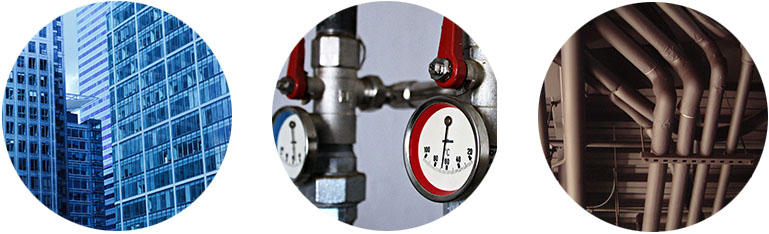
Example of HVAC temperature and humidity monitoring in technical zones and building areas.
How the SensGuard HVAC monitoring system works
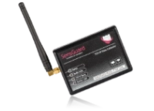
The system uses wireless temperature and humidity sensors installed in key building zones: offices, corridors, entrances, staircases, technical rooms and near HVAC equipment. Sensors read parameters every 5 minutes and send data to the SensMax TCP LR X2 gateway, which transmits it to the SensGuard cloud platform.
Each sensor has configurable min/max temperature and humidity thresholds and an allowed violation time. This helps ignore short fluctuations (for example, door opening) and focus on actionable issues such as HVAC malfunction, stuck valves, blocked ducts or incorrectly tuned controllers.
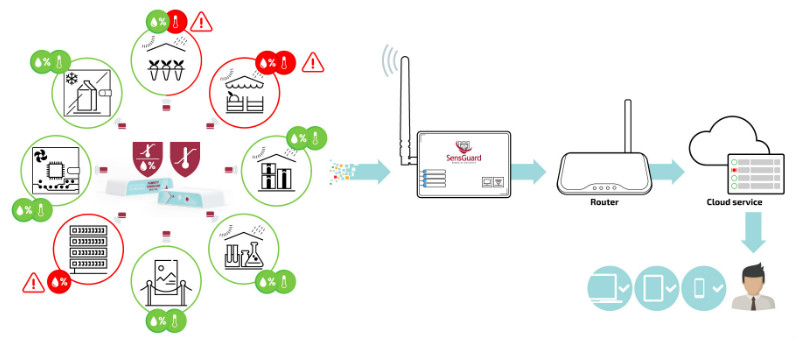
SensGuard architecture for remote HVAC temperature and humidity monitoring in smart buildings.
One gateway can collect data from up to 250 sensors within 150 m (extendable to 500 m with repeaters). The gateway buffer memory prevents data loss during Internet outages. Wireless sensors are battery-powered with a typical battery lifetime of up to 5 years and are suitable for indoor use or protected outdoor locations.
Request HVAC monitoring consultation
Hardware used in this HVAC monitoring solution
For HVAC and smart building projects, SensMax provides wireless sensors for offices and public areas, as well as probe sensors for ducts, pipes and technical equipment zones.
| Device | Type | Temperature range | Accuracy | Resolution | Battery / Power | Typical use |
|---|---|---|---|---|---|---|
| MCP9800 wireless temperature sensor | Waterproof sensor | −20°C…+55°C | ±0.5°C | 0.1°C | up to 5 years | General building areas: offices, corridors, lobbies and meeting rooms (temperature monitoring). |
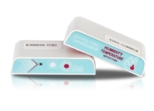
| ENS210 wireless temperature & humidity sensor | Temperature & humidity sensor | −20°C…+55°C / 0–100% RH | ±0.5°C / ±3.5% RH | 0.1°C | up to 5 years | Comfort monitoring and humidity tracking in offices, malls and public areas. |
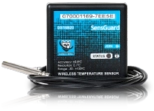
| DS18B20 probe-type wireless temperature sensor | Probe sensor | −30°C…+120°C | ±0.5°C | 0.1°C | up to 5 years | HVAC ducts, pipes and technical locations where a probe must be placed on or inside equipment. |
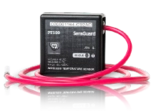
| PT100 wireless temperature sensor with probe | High-range probe sensor | −50°C…+200°C | ±0.2°C | 0.1°C | up to 5 years | Supply/return lines, heat exchangers and high-temperature HVAC components. |
Energy efficiency and comfort control
Continuous monitoring helps balance heating and cooling between zones, avoid constant overcooling or overheating and verify that HVAC equipment follows setpoints. Trend data often reveals patterns such as persistent overcooling in a specific wing, high humidity in a corridor or unstable temperatures near air handling units.
Keeping temperature and humidity within recommended ranges improves comfort for occupants, reduces complaints and can extend the lifetime of building materials and technical equipment.
Recommended smart building configuration
- 10–80 wireless sensors depending on building size, number of floors and monitored zones
- 1–3 SensMax TCP LR X2 gateways with LAN/Internet connection
- SensGuard cloud access for facility managers, technical staff and building owners
- Automatic notifications via e-mail and Telegram messenger for on-duty personnel
SensGuard cloud software for HVAC monitoring
The SensGuard online portal provides a practical overview of climate conditions in the building. Users can:
- see real-time temperature and humidity values for each zone and technical area
- upload a building or floor map and place sensors on it to identify problem zones faster
- set individual min/max thresholds and allowed violation times for each sensor
- configure role-based notification rules via e-mail and Telegram messenger
- analyse long-term trends to improve HVAC operation and energy usage
- export data in CSV or PDF format for internal reports and maintenance documentation
FAQ — Remote HVAC temperature and humidity monitoring
- How often does the system measure temperature and humidity?
Sensors record values every 5 minutes and send data to the cloud through the gateway. - Can I monitor multiple floors and tenants?
Yes. Sensors can be grouped by floor, zone or tenant area to monitor large buildings. - What happens if the Internet goes down?
The gateway has buffer memory to prevent data loss during temporary connectivity outages. - Can I set different thresholds for different zones?
Yes. Each sensor has its own min/max limits and allowed violation time. - Is the system suitable for technical HVAC rooms?
Yes. Probe sensors support ducts, pipes, heat exchangers and other equipment monitoring points. - How does monitoring help reduce energy consumption?
Trend data helps identify overheating, overcooling and unbalanced zones that increase energy waste. - How many sensors can one gateway handle?
Up to 250 sensors per gateway, depending on range and building layout. - How are alerts delivered?
Alerts can be sent via e-mail and Telegram messenger when thresholds are exceeded for longer than the allowed time.
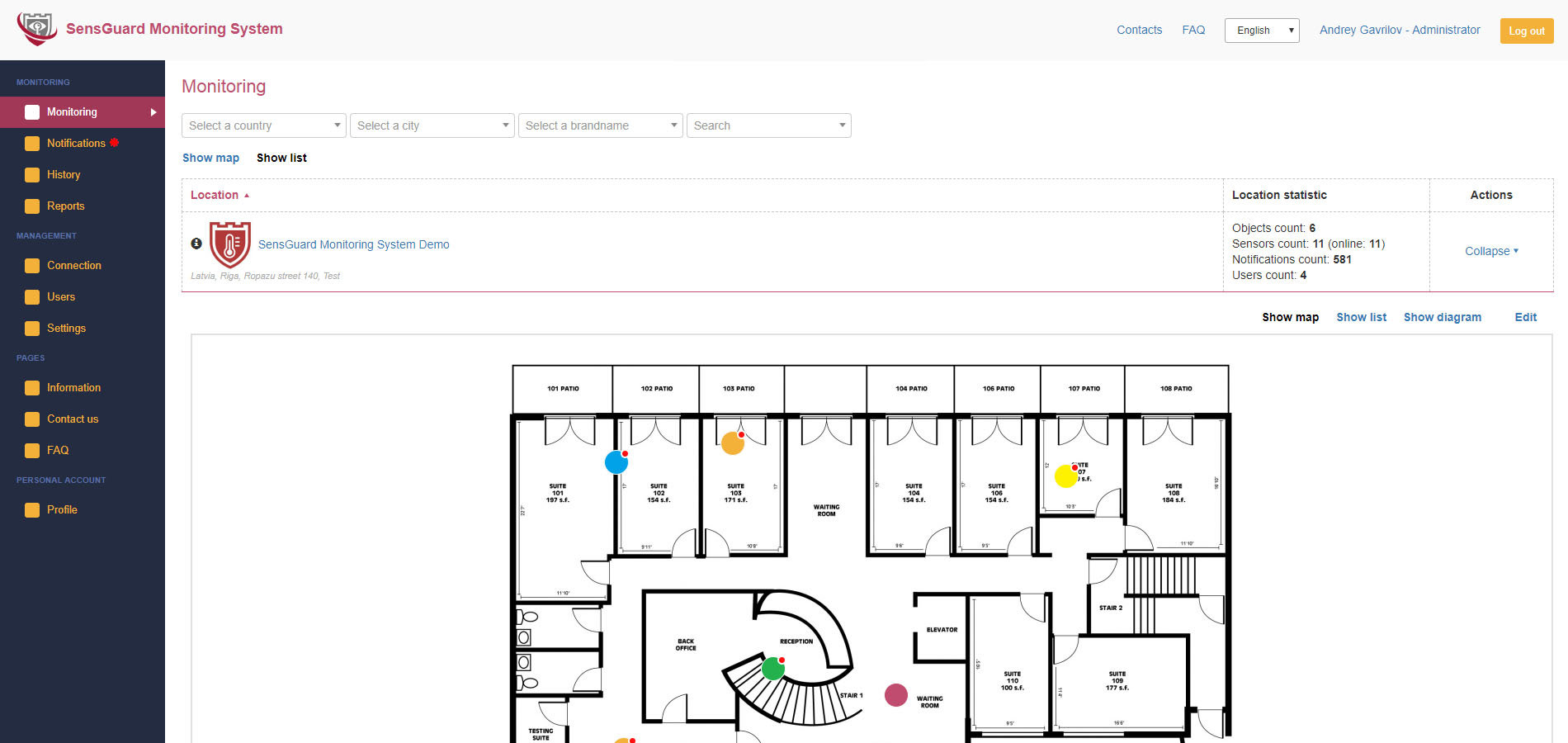
Overview of monitored zones with current temperature and humidity readings.
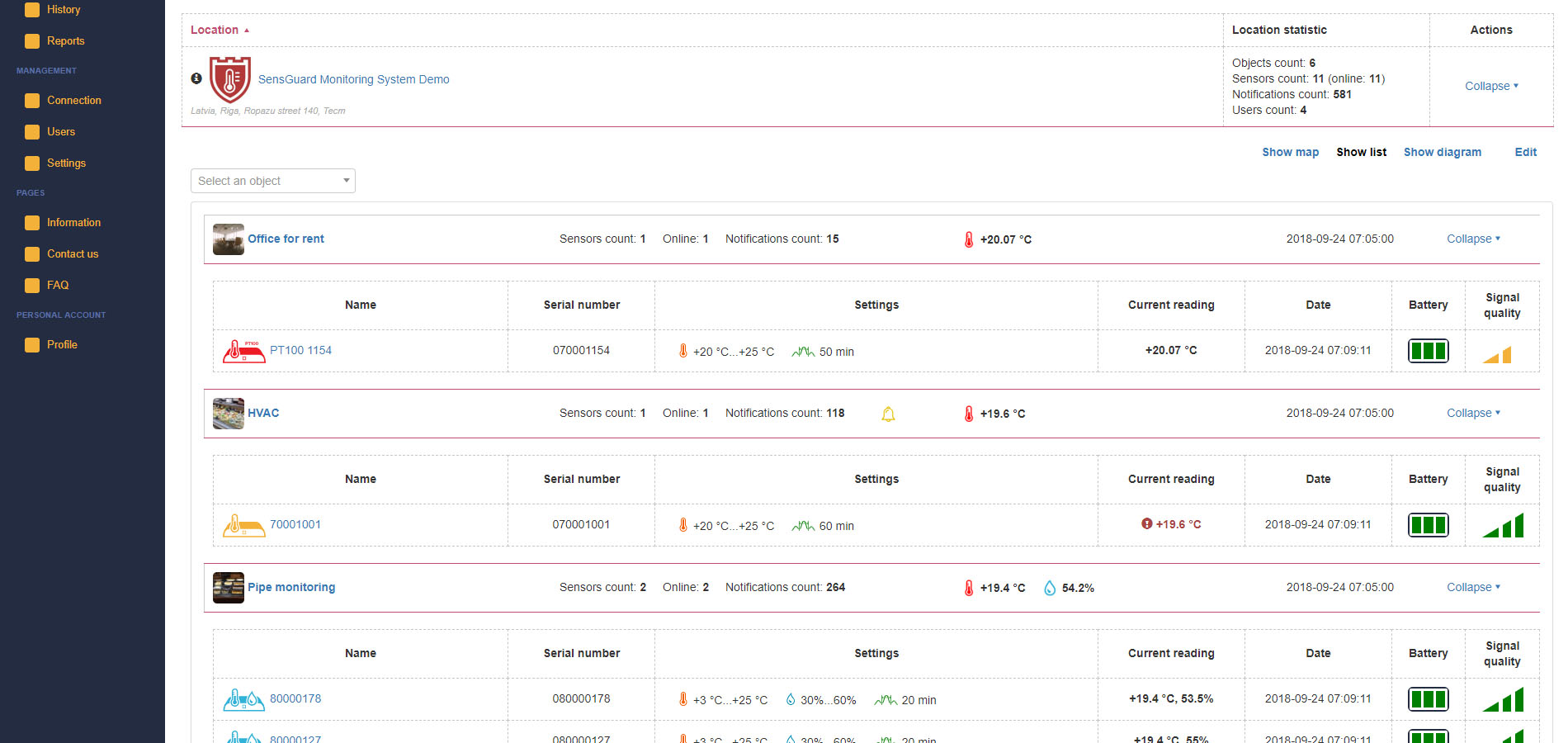
List of rooms, floors and technical areas with live climate status indicators.
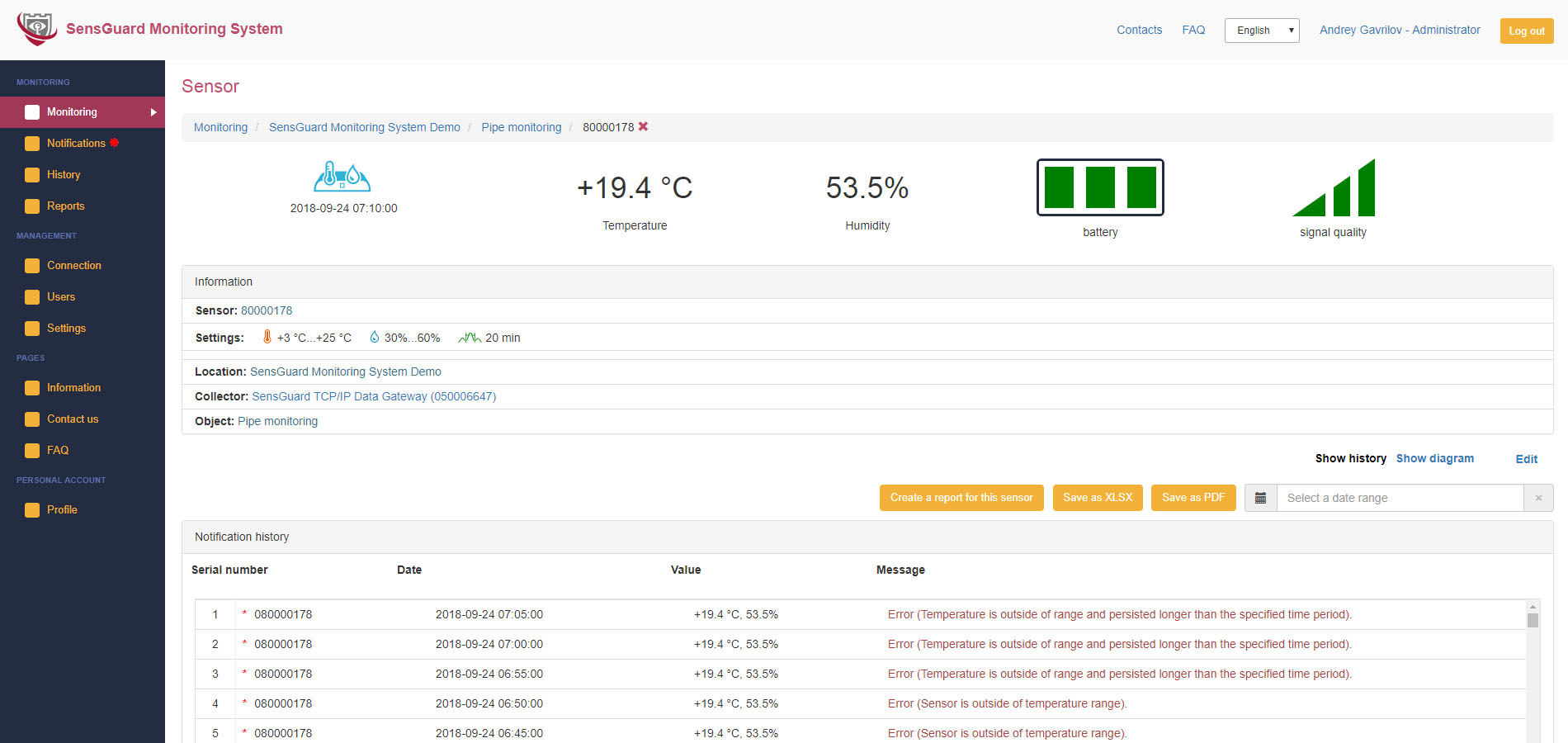
Sensor details with alarm history, comments and threshold settings for a building zone.
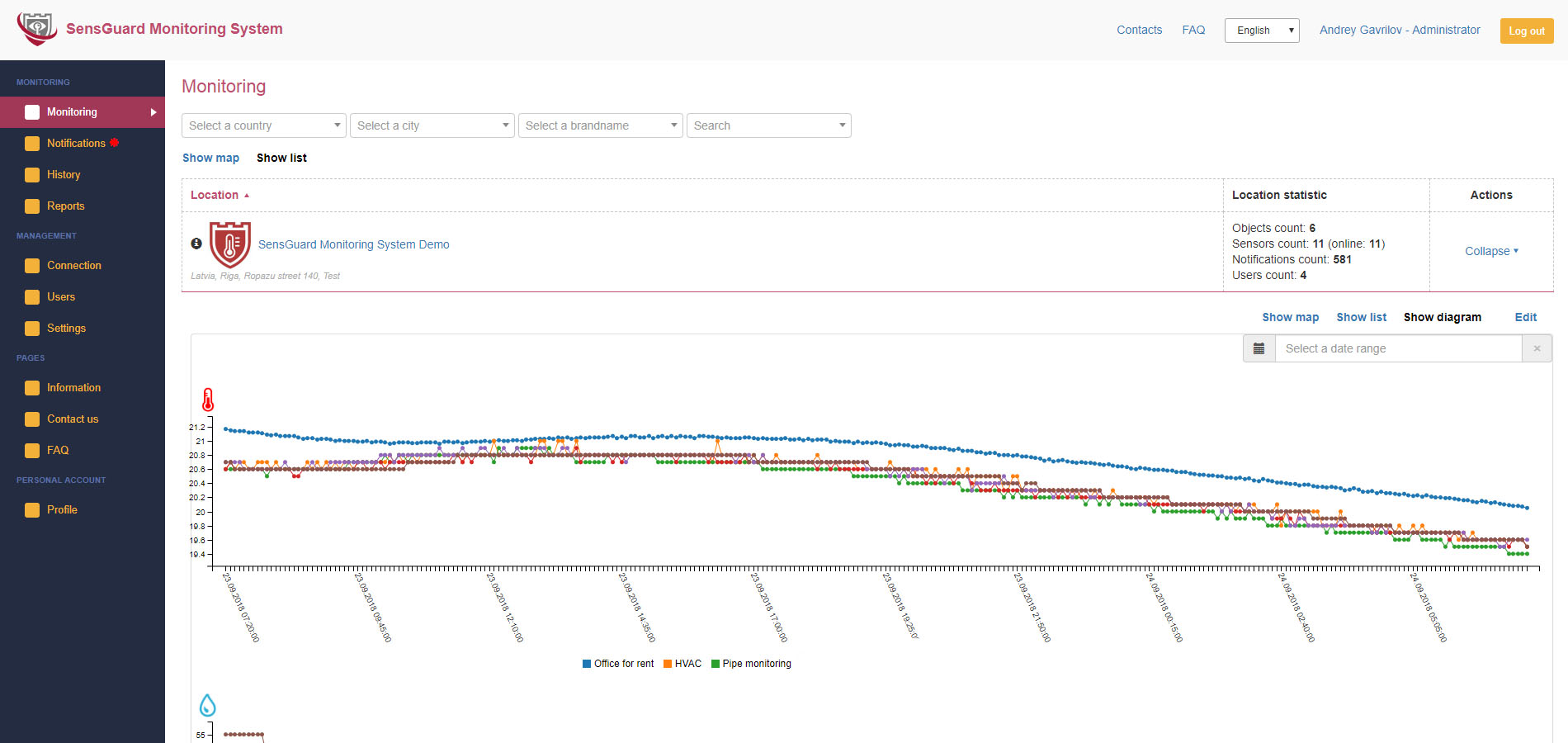
Trend chart used for HVAC optimization and energy analysis.
Need a practical sensor plan for your building zones and HVAC equipment points? We can help you select sensors and gateway placement.
Request a quote for HVAC monitoring system