
The global people counter market is projected to reach USD 2.65 billion by 2030, driven in part by surging demand from small stores seeking to remain competitive in the digital age.
The growth in demand is necessitated by the fact that running a small shop today means dealing with higher costs, tighter margins, and customers whose shopping habits change faster than ever. People counters come in to help managers and owners understand how many people come to your store and which times of day are busiest.
This then lets you know when to adjust your promotions and whether your shop layout is helping or hurting your revenue. Simply, relying on instinct alone in 2026 is no longer an option for small local retailers.
How Small Shops Are Benefiting
Footfall Data Separates Traffic Problems from Sales Problems
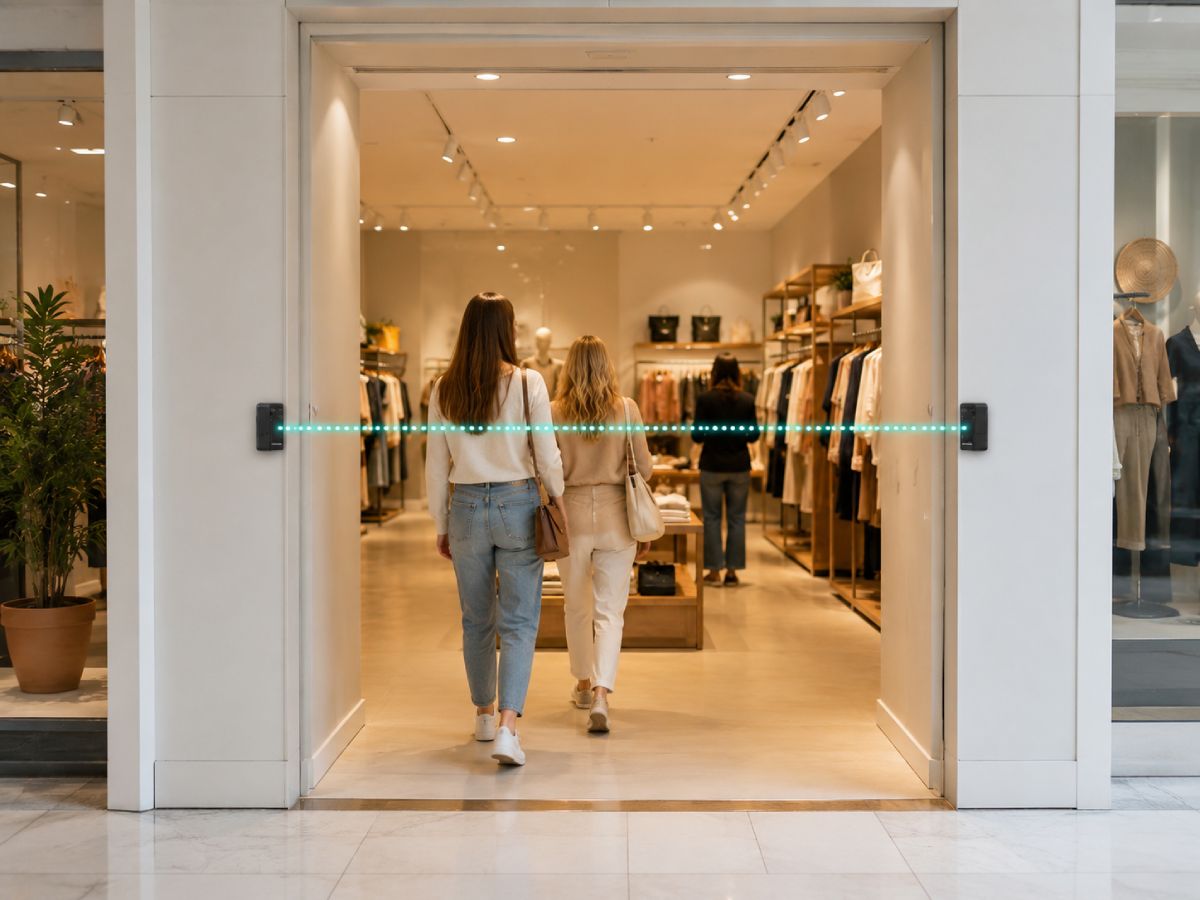
One of the biggest advantages of using a small shop people counter is knowing whether your real problem is getting customers in or getting customers to buy. Easy-to-install infrared sensors like the SensMax S1 and SensMax D3 enable you to evaluate conversion rates by comparing visitor traffic to sales.
If foot traffic is strong but revenue is flat, you may need to adjust your pricing, store layout, or customer service. On the other hand, if foot traffic is down, you should focus more on marketing or visibility.
While these problems are quite different, they can appear the same in your data reports without people counters. Shop owners are therefore adopting people counters to avoid relying on trial-and-error fixes.
Smarter Staffing in a High-Cost Labour Market
Labour is one of the largest expenses for small shops, and for most shop owners, it’s also one of the hardest to manage. If there are too few staff on the aisles, you may miss out on potential sales during peak hours. Overstaff on a low foot traffic day, and you’re risking running a massive loss.
Small shop people counters help you align your staffing with actual customer demand by showing the exact peak hours and slow periods. This allows you to open enough registers to avoid long lines and, over time, improves customer experience and revenues.
Marketing Is Being Measured by Visits, Not Just Sales
One of the biggest questions in most shop owners' minds is whether their promotions are moving the needle. Many don’t have large marketing budgets, and discounts come at a huge cost, given the tight margins most small stores run on.
People counters allow you to compare footfall before, during, and after promotions to see their impact. They let you see which campaigns were more successful, allowing you to allocate more resources.
This is important as shop owners often make the mistake of writing off a marketing campaign simply because it didn’t drive sales. Some promotions may increase sales without increasing store visits, while others may bring in more customers who don’t end up buying.
Most shop owners seek immediate ROI from their promotions, but campaigns that increase store visits without an increase in sales are still valuable. They introduce new customers to your shop and help build long-term brand awareness and customer loyalty.
People counters can help you read between the lines and know the return on investment for each promotion. In addition, a small shop people counter will help you optimise ad and signage placement in your store. You can track foot flow and dwell time to identify “hot spots” and “dead zones” where in-store ads will be less visible. This will give you a clear idea of retail footfall trends for future planning.
Conversion Rate Is Becoming a Core Metric for Small Shops
Once you start tracking foot traffic, it’s only natural to want to know the percentage of visitors who make a purchase. It helps you quickly identify missed sales opportunities due to slow checkout or restocking.
You can increase revenue without needing more customers by simply improving conversion rates. This can be a powerful growth lever if your shop is near capacity during peak times. By measuring conversion rates, you can optimise your store layout, checkout, and aisle service to increase the average amount your customers spend per visit.

Store Layout and Product Placement Are Becoming Data-Driven
Go to most stores, and you’ll notice some zones perform better than others. You’ll see customers follow certain paths, pause in some areas, and ignore others. Many shop owners simply assume that customers are interested in some products more than others, but that isn’t always the case.
Instead of designing your shop’s layout based on trends, you can use the insights from your people counter to arrange your shelves to suit how customers actually move through your floor space.
Radar-based people counters, such as SensMax TAC-B 3D-W Indoor People Counting Radar, can help you map traffic flow and identify the most frequented areas. It also highlights dead zones, enabling you to redesign them to improve accessibility.
If your shop's floor space makes it hard to eliminate dead zones, you can place high-margin products in the hotspots to increase profits.
Technology Is Finally Built for Small Businesses
Another big reason why small shops are investing in people counters in 2026 is that they are now more accessible and affordable. Today, people counters are no longer complex enterprise systems and most of them don’t even need power as they can run on batteries for 1 or 2 years. This means you won’t need to change your current store setup or install complex systems in your space.
Getting your data is also easy as the sensors send the data directly to a gateway. This is typically done every 20 minutes, but the sensors can still store the data and send it later if there’s no active connection. The gateway will then send the data to a cloud or local server that will analyze it and present the metrics in a simple report.
A Platform for Growth
In 2026, small shops face a tougher retail environment, but they also have access to better tools than ever before. The growing adoption of people counters is finally enabling many to compete with big-box retailers and e-commerce platforms. Now shop owners can optimise their ad spend, make better staffing decisions, and develop more effective layout designs.
