
Camera vs Radar People Counting: What Affects Accuracy?
Camera-based and radar people counting systems are two modern technologies used to measure visitor traffic. They help retail stores, public buildings, smart facilities and outdoor locations make better decisions about staffing, space planning, energy use and daily operations.
Both technologies can provide useful people counting data, but their accuracy depends on different factors. Camera systems rely on visual information, while radar systems detect movement using radio signals. Understanding these differences helps you choose the right people counting solution for your space.
What Accuracy Means in People Counting Systems
Accuracy in people counting means how close the recorded count is to the real number of people who entered, exited or passed through a monitored area.
In practice, accuracy is more complex than simply counting crossings. People may enter, stop near an entrance, move around, walk in groups or exit through another point. A reliable people counting system must avoid double-counting and remain consistent throughout the day despite changing traffic patterns, lighting or weather conditions.
Even a small error can matter. For example, a 95% accurate system still miscounts 500 people in a location with 10,000 visitors.
How Camera-Based People Counting Works
Camera-based people counting systems capture visual footage and process it on the device, local network or cloud platform. A camera is usually mounted above an entrance or at an angle and uses software algorithms to detect human shapes and movement direction.
Some systems use AI processing to improve detection, but their performance still depends heavily on image quality, lighting, camera position and calibration.
What Affects Accuracy in Camera People Counting Systems
Lighting Conditions
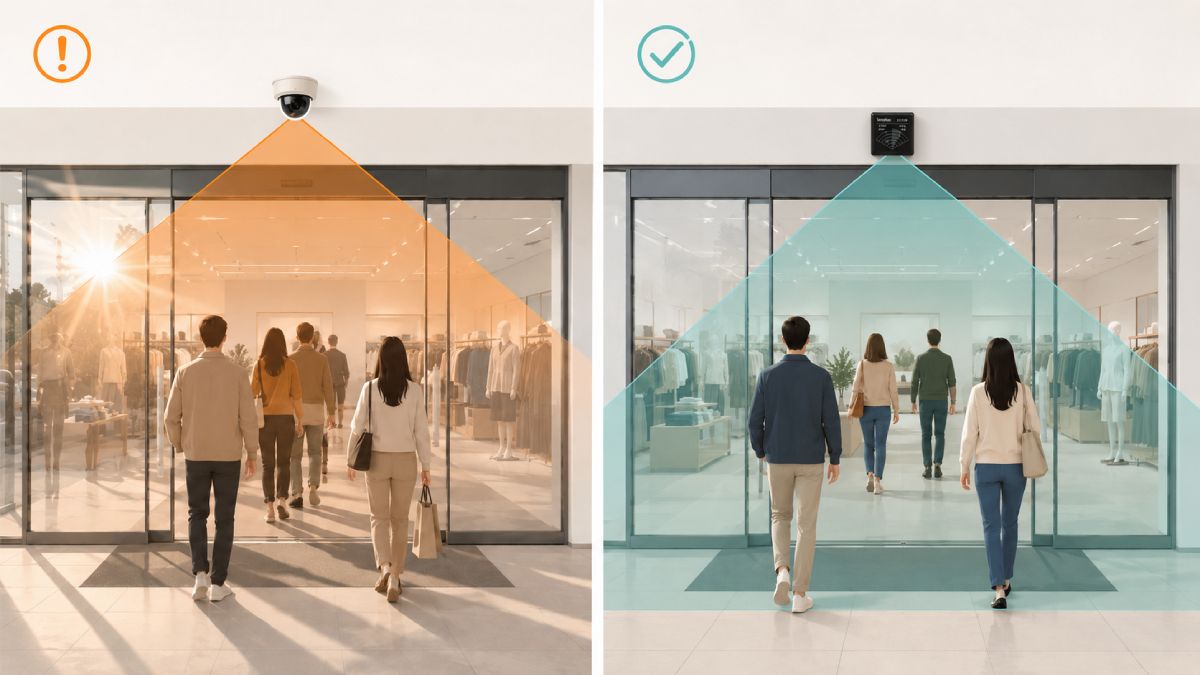
Lighting is one of the biggest variables for camera-based people counters. Low light makes it harder to process visual information, while direct sunlight, glare and shadows can reduce visibility and affect counting accuracy.
Camera Placement and Angle
Cameras rely on what they can see. If the mounting angle or height is wrong, people may appear distorted or partially hidden. Adjusting the angle for accuracy can also reduce the field of view.
Crowd Density
When people walk close together or overlap visually, camera systems may struggle to separate individuals. This is common near entrance gates, narrow corridors and high-traffic doorways.
Environmental Changes
Camera-based systems can be affected by changing surroundings, moving doors, rain, fog, night conditions, seasonal lighting and outdoor reflections. Any technology based on vision must handle these changes to remain accurate.
Image Processing and AI Quality
The accuracy of a camera system depends on the quality of its image processing model. Different vendors use different algorithms, and calibration may be required to maintain performance in each location.
How Radar-Based People Counting Works
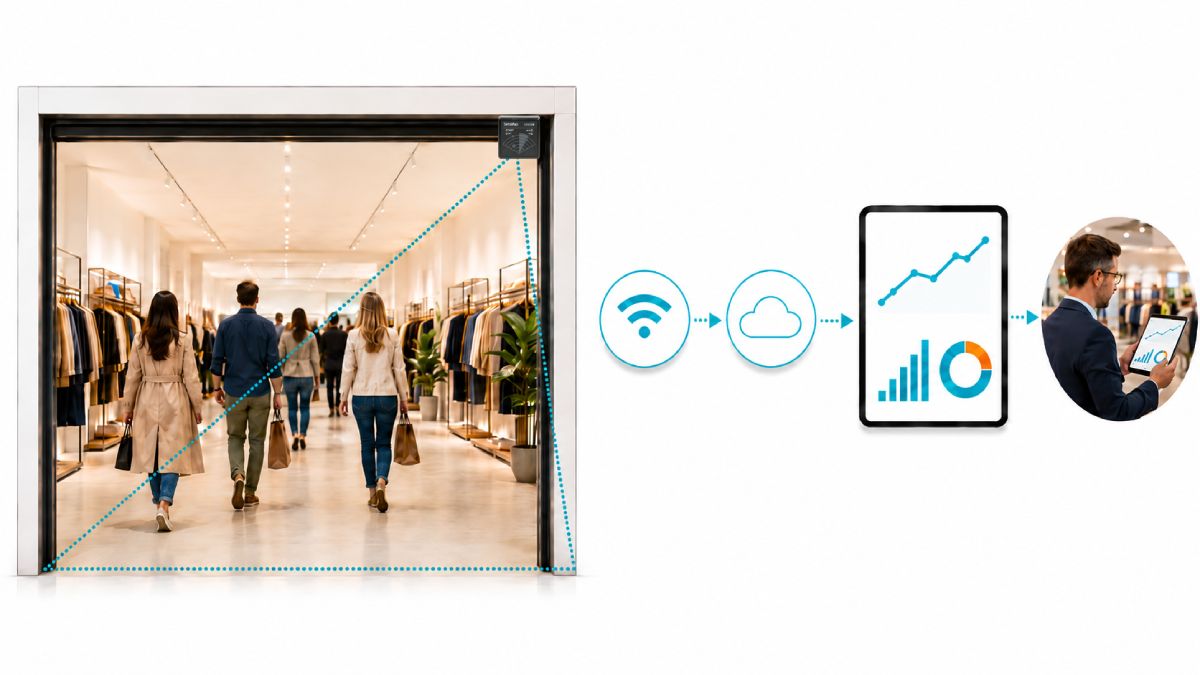
Instead of relying on images or video, radar-based systems like the SensMax TAC-B range use radio waves to detect movement within a defined area. The sensor analyzes signal reflections from moving objects to determine direction, speed and movement patterns.
The main advantage of radar people counting is that it does not record images or video. This makes radar a privacy-safe option for people counting in commercial and public environments.
What Affects Accuracy in Radar People Counting Systems
Environmental Factors and Signal Interference
Radar works by analyzing reflected signals. Highly reflective surfaces or complex layouts can affect signal behavior, so correct configuration is important in challenging spaces.
Coverage Range and Sensor Placement
Radar sensors must be installed where they have a clear view of the monitored area. Placement, height and angle should be selected to cover the required entrances or zones while avoiding overlaps.
For TAC-B projects, the sensor is typically mounted around 2.5–3 m height, depending on site layout, with wide coverage for entrances and public areas.
Movement Patterns
Radar sensors should be configured according to how people move through the monitored area. A retail entrance, public lobby, corridor and outdoor passage may each require different counting lines or zones.
Multi-Person Detection
Separating people walking side by side is difficult for any people counting technology. Advanced radar people counters can handle overlapping movement more reliably than many visual systems, especially when configured correctly for the site.
Camera vs Radar People Counting Comparison
| Factor | Camera-Based Systems | Radar-Based Systems |
|---|---|---|
| How it works | Requires clear visuals and proper lighting | Uses radio signals and works independently of lighting |
| Lighting conditions | Affected by glare, shadows, low light and sunlight | Not dependent on visual lighting conditions |
| Crowded spaces | Can struggle when people overlap visually | Handles overlapping movement more reliably when configured correctly |
| Maintenance | May require lens cleaning, recalibration and setup adjustments | Lower maintenance after correct installation and configuration |
| Installation | Requires careful camera position and field of view | Placement still matters, but installation is generally more flexible |
| Privacy | Captures visual data and may require privacy controls | No images or video capture; privacy-safe people counting |
Which Technology Should You Choose?
The best choice depends on your location, traffic flow, installation conditions and privacy requirements. Camera-based systems can work well when lighting and camera placement are controlled.
Radar people counting is often the better choice when you need stable performance across changing lighting conditions, flexible installation and privacy-safe operation without image capture.
Conclusion
Camera and radar people counting systems can both provide valuable visitor analytics, but they respond differently to real-world conditions. Camera systems depend on visibility, while radar systems detect movement without images and are less affected by lighting changes.
For organizations that need reliable, privacy-safe and low-maintenance people counting, radar-based systems are often the more practical choice.
