Museum or library | Visitor counting


Wireless People Counting System for Libraries and Museums
The SensMax wireless people counting system for libraries and museums helps measure real visitor traffic and attendance in public cultural buildings. It provides reliable visitor statistics for entrances, reading rooms, exhibition halls and event spaces, helping institutions plan staffing, report attendance for funding, and understand how visitors use the building during the day.
The system is fully wireless and battery-powered, so it can be installed without cabling or structural modifications. People counting sensors send data through SensMax SMX gateways to a cloud or local reporting platform. The solution is camera-free and GDPR-compliant: it does not capture images or identify individuals, only anonymous entry counts.

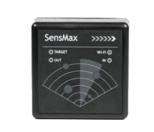
Wireless visitor counting system for library and museum entrances.
Where the System Is Used
- Main entrances and secondary doors
- Exhibition halls and temporary event spaces
- Reading rooms and study areas
- Ticketed zones and special collections
- Multi-floor buildings and multiple branches

Wireless visitor counters installed at library and museum entrances.
Why Visitor Counting Matters
Libraries and museums rely on trusted visitor numbers for operational planning and reporting. A wireless people counting system helps build an objective picture of attendance without manual counting and without compromising privacy.
- Align staffing with real visitor peaks and quiet hours
- Measure exhibition and event performance using footfall data
- Support grant and funding reports with verifiable attendance statistics
- Understand which rooms and zones receive the highest visitor traffic
- Compare seasonal and yearly visitor trends across the site
Request a consultation with Sensmax
How the Wireless People Counting System Works
People counting sensors are mounted on both sides of a doorway or passage at about chest height. Each crossing is detected by infrared beam technology and registered as a count. Bidirectional sensors provide separate IN and OUT totals, which can be used for occupancy monitoring and visitor flow analysis. Unidirectional sensors record total crossings.
Sensors transmit data wirelessly to a SensMax SMX gateway. The reporting platform then generates automated visitor analytics: hourly trends, daily totals, long-term comparisons, and email reports. Each device includes internal backup memory that stores up to 25 days of hourly data to protect statistics during temporary connectivity interruptions.
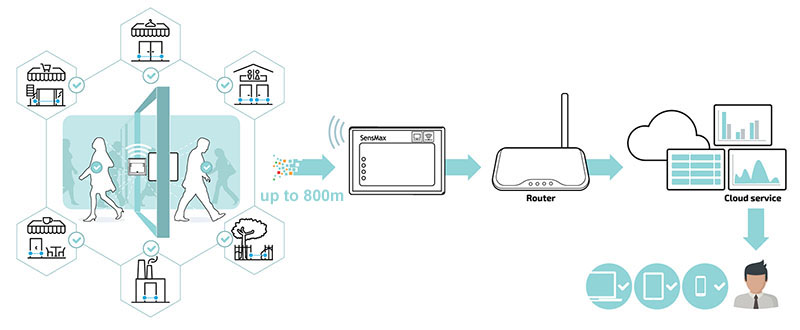
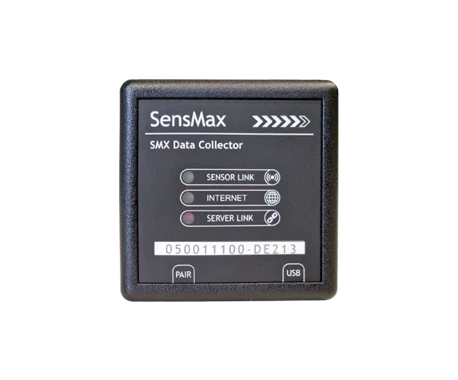
Wireless sensors send visitor data via SMX gateways to reporting software.
Installation (Wireless and Privacy-Safe)
The system is installed at entrances and indoor passages without cabling. Sensors are mounted on the left and right side of the passage and aligned across the walking path. After installation, counting runs automatically and remains privacy-safe because the system does not use cameras and does not store personal data.
- Mount sensor units on opposite sides of the passage (tape or bracket)
- Align the infrared beam line across the entrance
- Insert batteries and register the sensors in the gateway
- Verify counts in the reporting portal and set reporting schedule
Key Advantages for Libraries and Museums
- Wireless installation without drilling or cabling
- Battery-powered operation suitable for historical buildings
- Camera-free and GDPR-compliant people counting
- Bidirectional IN/OUT counting for occupancy monitoring
- Internal backup memory for secure data storage
- Scalable across multi-floor buildings and multi-site institutions
Recommended Devices
- SensMax S1 – wireless unidirectional people counting sensor for total visitor counts
- SensMax D3 – wireless bidirectional IN/OUT people counting sensor for visitor flow
- SensMax D3 TS – real-time wireless IN/OUT sensor for frequent updates
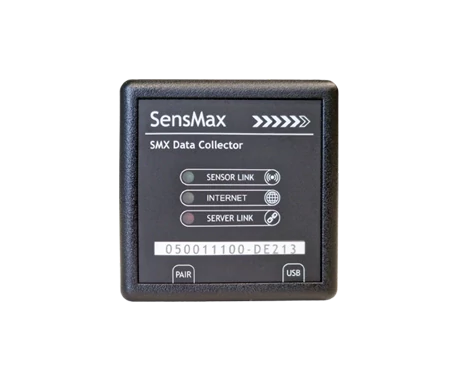
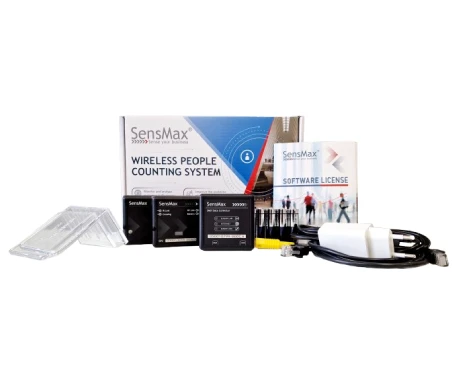
- SensMax SMX Gateway – Wi-Fi/LAN gateway for collecting sensor data and sending it to reporting tools
Reporting and Integration
Visitor counting data is available in SensMax reporting tools with ready-to-use analytics. Libraries and museums can use cloud reporting or local software installation. Reports include hourly visitor traffic, daily totals, long-term attendance comparisons, and automated email reports for staff.
For integrations, data export is available through API or MQTT to connect visitor counting statistics to external dashboards and facility systems.
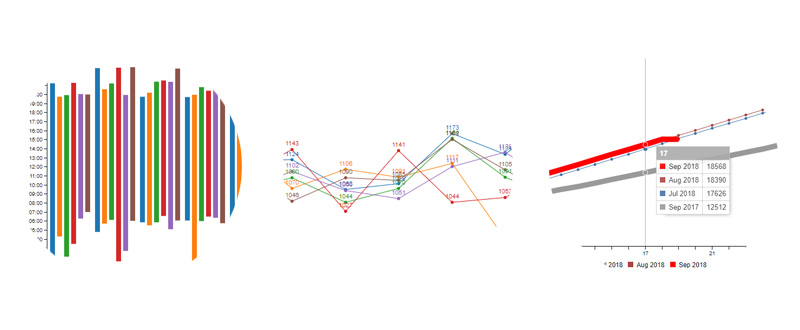
Visitor analytics dashboards with attendance trends and zone statistics.
FAQ – Wireless People Counting for Libraries and Museums
- Does the system use cameras?
No. The system uses infrared beam sensors only and does not capture images or video. - Is the people counting GDPR compliant?
Yes. Counting is anonymous and does not store personal data, identities or biometric information. - What is the difference between S1 and D3?
S1 counts total crossings. D3 provides separate IN and OUT counts for visitor flow and occupancy monitoring. - Can it be installed in historical buildings?
Yes. The system is wireless and battery-powered and can be installed without cabling or structural changes. - What happens if the gateway connection is lost?
Sensors store data in internal memory (up to 25 days of hourly statistics) and send it when connectivity is available again. - How is the data delivered?
Sensors send data wirelessly to an SMX gateway, which forwards it to cloud or local reporting software. - Can the data be integrated into other systems?
Yes. Data export is available through API or MQTT for third-party dashboards and software. - Where should sensors be installed?
They are installed on both sides of an entrance or passage at about chest height, aligned across the walking path.