Parks | People counting in parks


SensMax TAC-B People Counter for Parks
The SensMax TAC-B people counter for parks helps management understand how visitors use a park. It provides accurate, real-time analytics on visitor numbers and movement patterns, helping municipalities and park operators make better decisions for daily operations, maintenance planning, infrastructure development and Smart City reporting.
The system uses 60 GHz mmWave radar to count pedestrians, cyclists and scooters without cameras. It supports real-time Wi-Fi or 4G data transfer, configurable counting lines and zones, and wide outdoor coverage for park entrances, public paths, recreational routes and shared pedestrian/cycling areas.
- Advanced technology – 60 GHz mmWave radar for accurate outdoor people counting in changing weather conditions.
- Multiple counting lines – up to 5 configurable counting lines and zones for bidirectional people counting.
- Privacy compliant – no cameras, no images and no personal data collection.
- Real-time Wi-Fi / 4G transfer – data is sent to SensMax dashboards for analysis and reporting.
- Wide detection area – up to 10 m range with a 120° viewing angle, covering approximately 100 m² under suitable installation conditions.
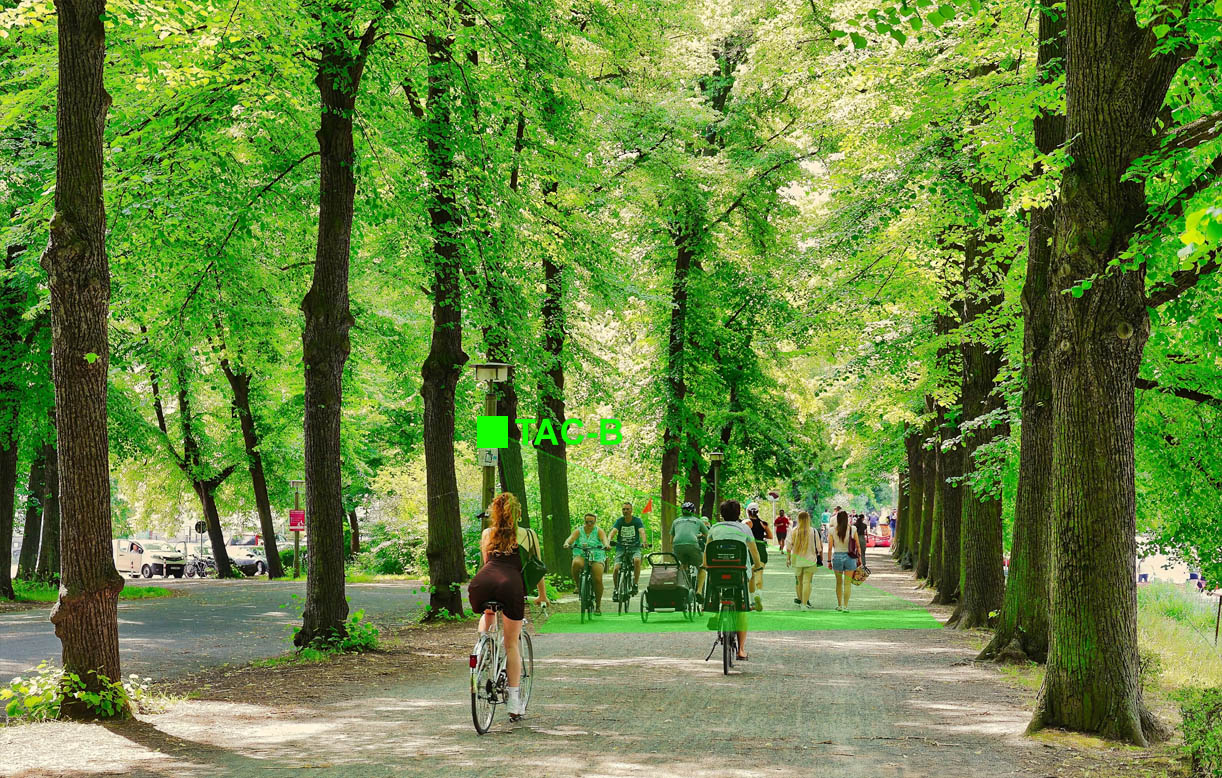
Outdoor people counting in public parks using SensMax TAC-B radar sensors.
People Counting in Parks
Public parks attract a wide variety of visitors, from pedestrians and joggers to dog walkers and cyclists. When management understands how people use the space, it becomes easier to plan Smart City operations, create efficient maintenance schedules and evaluate project results.
The SensMax TAC-B people counter for parks makes this possible by tracking visitor activity and turning it into clear reports. Municipalities and park operators can understand traffic flow, visitor behaviour and seasonal usage patterns, then use these insights for maintenance, staffing, event planning and funding decisions.
Why People Counting Data Matters for Parks
When management can see the number of visitors, the entrances they use and when peak activity occurs, decisions can be based on real data instead of assumptions.
These statistics help:
- Evaluate the popularity of different park areas and entrances.
- Compare seasonal visitor trends.
- Plan cleaning, maintenance and landscaping schedules based on actual usage.
- Measure the impact of events or infrastructure improvements on visitor numbers.
- Justify funding requests, staffing levels and improvement projects with verifiable data.
- Identify overused and underused zones for planning purposes.
How the SensMax TAC-B People Counter Works
SensMax TAC-B radar sensors use 60 GHz mmWave technology to detect movement, direction and speed without filming anyone or recording personal data. This makes the system suitable for privacy-safe outdoor people counting in public spaces.
Each sensor can monitor movement within up to a 10 m range and a 120° field of view. Movement speed can be used to support traffic interpretation, for example separating walking, jogging and cycling patterns in mixed-use park areas.
The sensor sends data via 4G or Wi-Fi to the SensMax cloud dashboard, where it becomes available as reports and analytics. Municipalities can also integrate the data into Smart City platforms, GIS tools or other systems using MQTT or API.
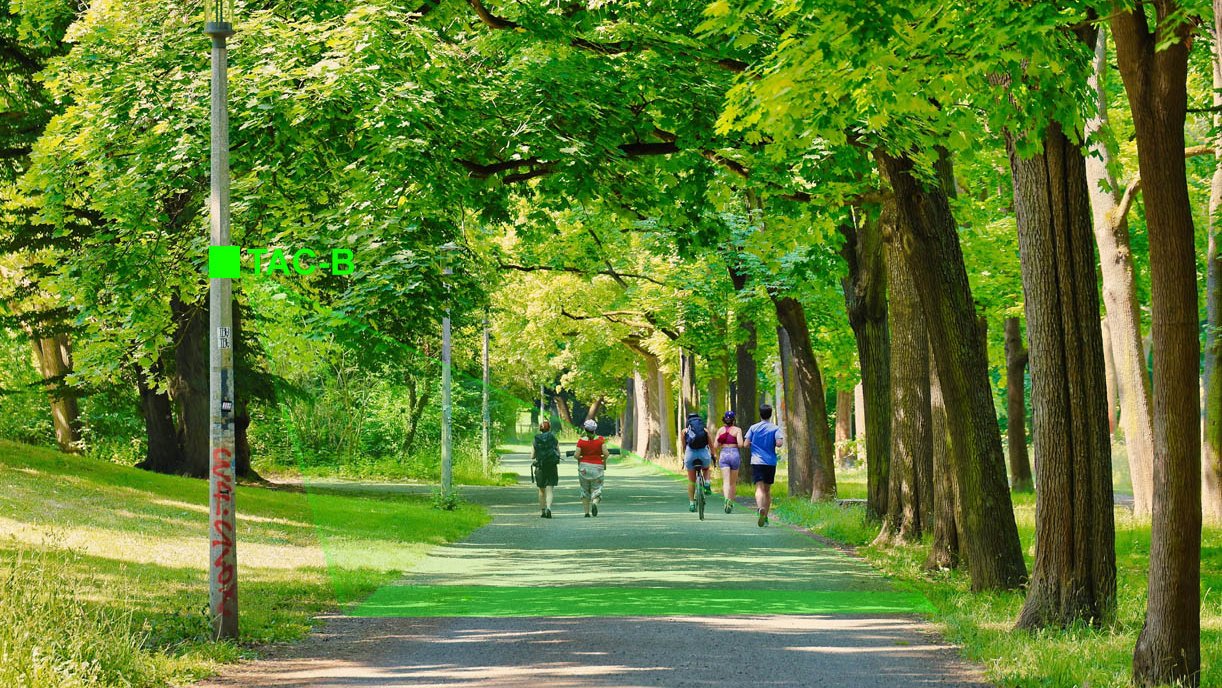
SensMax TAC-B radar sensor counting pedestrians and cyclists in a public park.
Key Benefits for Park Operators
Radar outdoor people counters provide several benefits compared to traditional footfall counting systems:
- Accurate detection across visitor types – counts pedestrians, cyclists and scooters in outdoor environments.
- Works in different weather and light conditions – not dependent on cameras, sunlight or night visibility.
- Privacy-safe by design – no camera, no image recording and no personal identifiers.
- Flexible installation – mounts on lamp posts, park gates, bollards or pillars at approximately 2.5–3 m height.
- Off-grid option – can use the SPS20 solar power kit in locations without electricity.
- Multiple counting zones – up to 5 configurable lines and zones per sensor for large or multi-entrance areas.
- Real-time data access – dashboard updates via 4G or Wi-Fi for real-time visibility of visitor flow.
- Low-maintenance operation – no regular servicing required after installation.
Performance and Accuracy in Outdoor Environments
Each TAC-B outdoor people counter can detect movement within an area of approximately 100 m² and distinguish direction and visitor type under suitable installation conditions. Performance remains stable in rain, snow, fog, darkness and direct sunlight because the system relies on radar instead of visual images.
To ensure maximum accuracy, mount the sensor at a height of about 2.5–3 m in an area with a clear view of pedestrian and cycling paths.
Integration and Data Analytics
The SensMax TAC-B people counter for parks sends data to the SensMax cloud dashboard, where administrators can view daily, weekly, monthly and seasonal visitor trends. These reports help inform maintenance planning, park usage analysis and infrastructure decisions.
Reports can be exported by email or accessed through a web browser. The system also supports API and MQTT integration, making it possible to connect visitor data to Smart City systems, environmental monitoring platforms, GIS mapping tools, AWS, Azure or other existing cloud infrastructure.
Installation
The SensMax TAC-B outdoor people counter can be mounted on lamp posts, traffic lights, dedicated poles or other stable vertical structures at a height of approximately 2.5–3 m. The installation point should provide a clear view of the monitored path, entrance or shared pedestrian/cycling route.
For remote installations, the sensor can be combined with the SPS20 solar power kit. The kit is factory pre-wired, so installation requires fixing the units, turning the solar panel toward the sun and configuring the sensor using a mobile phone.
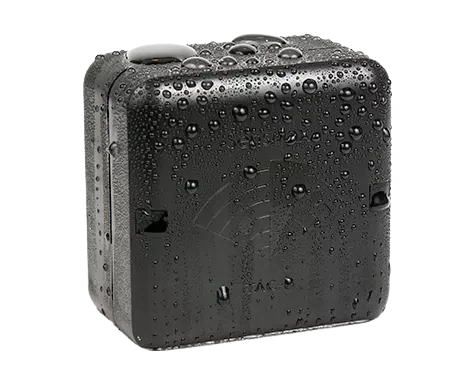
The sensor has an IP67 casing for outdoor use and operates within a -20 °C to +65 °C temperature range.
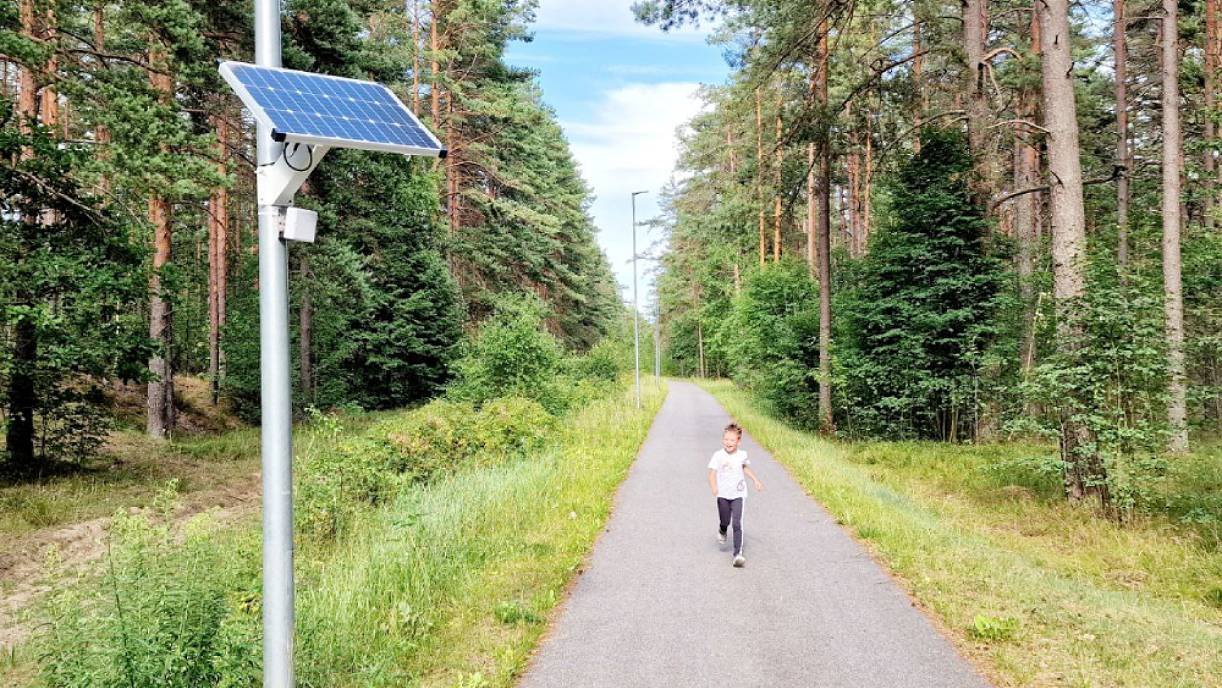
Installing a TAC-B radar sensor on a pole in a public park with optional solar power.
Real-World Applications
- City parks and recreational green areas
- Urban walking trails and jogging routes
- Shared pedestrian and cycling paths
- Park entrances and access points
- Botanical gardens and landscaped public spaces
- Waterfront promenades and leisure zones
- Outdoor event and festival areas inside parks
Business Impact
Understanding how many people use a park, when they arrive and which routes they prefer helps municipalities plan maintenance, improve services and justify investments. Park visitor counting supports cleaning schedules, staffing allocation, infrastructure upgrades and evaluation of project results using real usage data instead of assumptions.
Park traffic monitoring also supports Smart City planning and urban mobility analysis. By measuring pedestrian and cycling flows across public green spaces, municipalities can compare locations, prioritize improvements and prepare evidence-based reports for budget discussions, funding applications and long-term infrastructure planning.
Example in Action
A municipality installs SensMax TAC-B radar sensors at two main park entrances and along a shared walking and cycling route. After several weeks of monitoring, the data shows that weekend traffic is significantly higher than expected and that one entrance receives most evening visitors. The statistics also reveal increased bicycle activity during morning and late afternoon hours.
Based on this information, the city adjusts cleaning schedules, improves lighting near the busiest access point and uses the visitor statistics to support budget approval for additional maintenance resources and future path improvements.
Technical Specifications
| Parameter | Description |
|---|---|
| Detection area | Up to 10 m range / 120° view (approx. 100 m²) |
| Accuracy | Up to 98% under typical conditions |
| Mounting height | 2.5 to 3 m |
| Connectivity | 4G / Wi-Fi / API / MQTT |
| Power supply | 12 V DC / SPS20 solar kit |
| Operating conditions | -20°C to +65°C, IP67 weatherproof casing |
| Detected objects | Pedestrians, cyclists, scooters |
| Memory | Internal SD card for backup storage |
FAQ – People Counter for Parks
- How many visitors can one sensor monitor?
One TAC-B monitors visitors within a range of up to approximately 100 m². Multiple counting lines can be configured to track movement across several paths or entrances. - Can it work without electricity or internet?
Yes. TAC-B can work without local electricity when combined with the SPS20 solar kit. A 4G version is available for sites without local internet. - Does the sensor store data locally?
Yes. The sensor has an internal SD card for backup storage and can transfer data once connectivity is restored. - Is the system weather-resistant?
Yes. TAC-B has an IP67 casing and operates in rain, fog, snow, bright sunlight and darkness within a -20 °C to +65 °C temperature range. - How often does the system need maintenance?
After installation and configuration, the system is designed for low-maintenance operation. - Is the system privacy compliant?
Yes. TAC-B uses radar detection and does not collect images or personal data.
SensMax Devices
Hardware included in this solution:
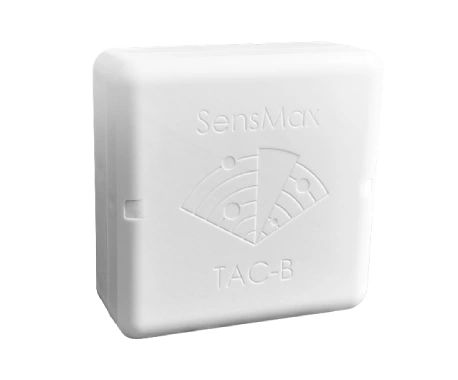
- SensMax TAC-B 4G Outdoor People Counting Radar
Outdoor radar people counter with built-in 4G/LTE for real-time pedestrian and cyclist counting. Works in changing outdoor conditions and covers up to 100 m² with up to 5 configurable counting lines and zones. - SensMax TAC-B 3D-WP Outdoor People Counting Radar
Camera-free outdoor radar with Wi-Fi connectivity for real-time pedestrian and cyclist counting. Works in different light and weather conditions and supports up to 100 m² coverage with up to 5 counting lines and zones. - SensMax SPS20 Solar Power System for TAC-B Sensors
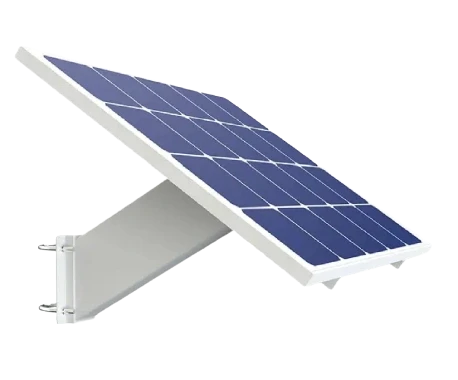
All-in-one solar kit with panel, battery and controller, providing 64 to 85 hours of off-grid power in temperatures between -20 °C and +65 °C. Compatible with TAC-B people and bike counting radar sensors for parks, trails and remote areas.