People counting Radar sensor vs Video sensor Comparison Guide
Radar vs Infrared vs Camera People Counter. Comparison Guide.
Choosing a radar vs infrared vs camera people counter isn’t a “best tech wins” decision – it’s a fit decision. Your environment (lighting, privacy policy, ceiling height, coverage needs) determines what will perform reliably and what will create long-term operational or compliance friction.
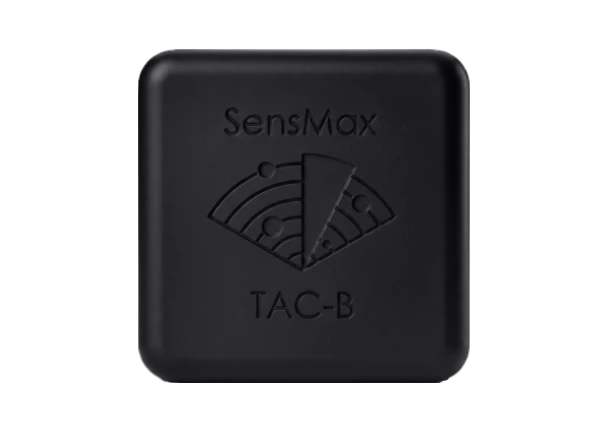
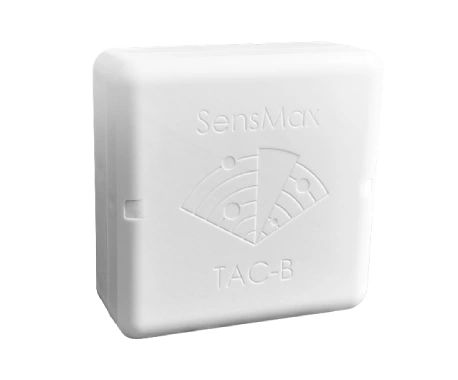
Recommended radar option (privacy-first + robust coverage): SensMax TAC-B people counting radar sensor. It’s built for anonymous counting and is positioned as GDPR/privacy-law compliant while staying resilient in poor visibility and changing light.
Get a recommendation for your site
Radar Vs Infrared Vs Camera People Counter – Choose The Right Counting Technology For Your Site
If you’re comparing technologies for retail, public buildings, or enterprise deployments, the goal is simple: reliable numbers you can use – without introducing unnecessary complexity or privacy risk.
At a glance
- Radar (mmWave): anonymous detection by design + wide coverage where lighting and visibility vary
- Infrared (IR): efficient for simple entrance counting where you need straightforward pass-by totals
- Camera (2D/3D/ToF): strong fit in controlled conditions, but performance and anonymity depend on the approach
Not sure which applies? Tell us your environment.
Why Technology Choice Matters
Most counting issues don’t come from “bad sensors.” They come from a mismatch:
- Privacy & compliance expectations: camera-based systems raise anonymity questions as privacy is at risk while using this technology; radar is positioned as anonymous and GDPR/privacy-law compliant by design.
- Lighting and visibility: camera counting quality can be sensitive to illumination, shadows, and background conditions; radar is described as immune to lighting and poor visibility conditions (fog/smoke/dust).
- Coverage economics: several video approaches have relatively small effective coverage per unit; radar is described with a wider viewing angle and up to 100 m² effective area.
This is why a radar vs camera people counter decision should start with operating reality – then technology.
Simple Explanation Of How Each Technology Works
SensMax TAC-B (Recommended Radar Option):
mmWave radar detects movement, filters static objects, and outputs coordinates of detected objects (rather than video imagery). That means counting stays camera-free and can remain anonymous.
- Operating frequency is stated as 60 GHz, enabling fine-grained tracking
- Designed to be GDPR/privacy-law compliant and provide an anonymous count
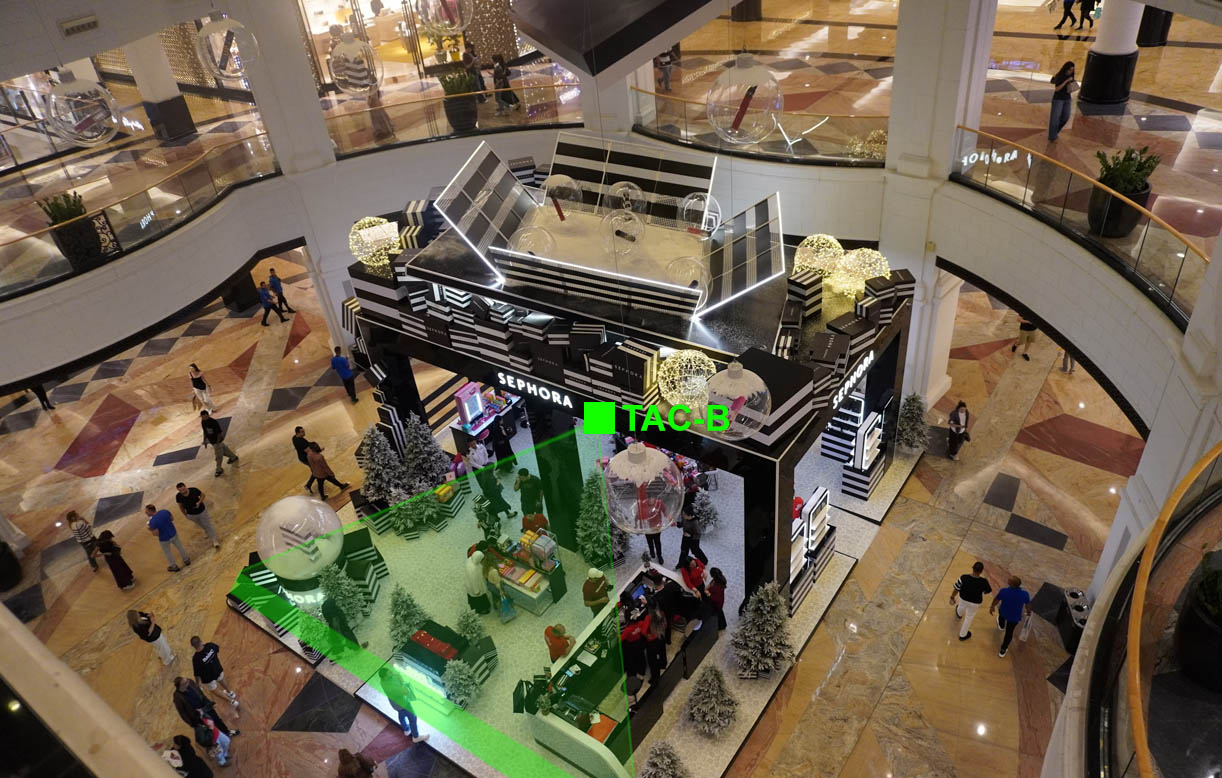
SensMax TAC-B radar sensor counting people in a retail store
Infrared (IR) – Where It Fits
Infrared people counters are commonly used when you want a simple, cost-effective entrance counting approach (e.g., a single doorway, straightforward traffic totals).
Camera-based counting – 2D / 3D / ToF
Camera-based systems count by interpreting images. The comparison guide highlights that image conditions can vary and affect recognition quality.
- 2D vision (one camera): broad viewing angle (up to ~90° noted), but relies heavily on lighting and a uniform background; struggles with shadows and non-uniform scenes.
- 3D vision (two cameras): adds depth filtering, but effective depth works at short distance and the viewing angle is narrower (~45–60° noted), with a typical effective area around ~2×2 m.
- ToF camera: measures return time of emitted light; described as independent from lighting and anonymous, but with a narrow viewing angle (~30–40° noted) and a smaller effective area.
Business Benefits
Understanding of a strong radar vs infrared vs camera comparison improves decision operations and reduces long-term risk.
What You Gain When The Tech Matches The Environment
- Trustworthy footfall trends across time periods and locations (so performance KPIs don’t drift with lighting/seasonality)
- Better staffing and service planning based on consistent flow patterns
- Space utilisation visibility (where traffic concentrates, how flows change)
- Lower privacy friction in sensitive sites by choosing anonymous-by-design approaches where needed
When TAC-B Is The Business-Smart Default
If your project is privacy-sensitive or visibility conditions vary, the guide positions radar as robust against lighting/poor visibility – and explicitly highlights TAC-B’s radar approach and coverage.
Talk to us about TAC-B for YOUR site
Where Each Technology Is Typically Used
Radar (mmWave)
- Retail and public environments where privacy-by-design matters
- Sites with variable lighting, glare, shadows, or poor visibility (e.g., dust/fog/rain scenarios)
- Locations where wider coverage per sensor helps reduce deployment complexity

SensMax TAC-B radar sensor installed on a light pole is counting pedestrians and cyclists
Infrared (IR)
- Simple entrances where the goal is straightforward, cost-effective counting
Camera (2D/3D/ToF)
- Controlled indoor settings where lighting and background are stable (and where camera-based tradeoffs are acceptable)
Reporting & Analytics
Counting only becomes useful when it turns into decisions.
If you want centralized visibility, the SensWeb cloud reporting platform can be positioned as a way to turn anonymous count events into ready-to-use reporting for day-to-day visibility, with options for exports and integrations depending on your workflow.
Technical Overview
Video Technologies (high-level constraints)
- 2D: relies on lighting and background; up to ~90° viewing angle noted
- 3D: narrower ~45–60° viewing angle; effective area often ~2×2 m; may use IR illumination with tradeoffs
- ToF: ~30–40° viewing angle; smaller effective area
SensMax TAC-B Radar Sensor
- 60 GHz mmWave radar; tracks objects with fine precision
- Anonymous people count; positioned as GDPR/privacy-law compliant
- 120° viewing angle and up to 100 m² effective counting area (as stated)
- Described as immune to light levels and capable in poor visibility conditions
- Example integration options mentioned: MQTT and Telegram API
- Installation note: TAC-B is described as wall-mounted vs many video sensors are ceiling-mounted
Avoiding Procurement Surprises
The guide flags that some solutions can come with “hidden fees” tied to subscriptions or upgrades; clarify the software model early during evaluation.
If you’re evaluating radar vs infrared vs camera people counter options for a rollout, we’ll help you match the technology to your site conditions and reporting needs – starting with the recommended radar path where privacy-first deployment is required.