


Why Choose a Wi-Fi People Counter for Retail and Public Venues

Retailers and facility managers need accurate door counts without running network cables to every entrance. A wireless infrared people counter paired with a Wi-Fi data gateway delivers anonymous visitor statistics straight to your reporting dashboard.
Store managers and facility teams need reliable visitor numbers to plan staff shifts, evaluate store performance, and manage building spaces. Pulling power and network cables to every entrance slows down multi-site rollouts and adds unnecessary electrical work. A Wi-Fi people counting setup solves this by combining battery-powered doorway sensors with a single wireless gateway that sends traffic data straight to your online dashboard.
Instead of installing bulky overhead hardware or running Ethernet lines to glass door frames, you mount compact infrared counters at waist or chest height and connect one gateway to your existing Wi-Fi network. Within minutes, your team gets consistent hourly and daily visitor counts across one location or dozens of sites.
How a Wi-Fi People Counter System Works
A common misconception is that every sensor needs its own built-in Wi-Fi chip. Putting a Wi-Fi radio inside a small battery sensor would drain the battery in weeks. Instead, SensMax separates the job into two parts: ultra-low-power doorway sensors and a central Wi-Fi data gateway.
Wireless infrared sensors such as the SensMax S1 or bidirectional SensMax D3 count visitors as they cross an invisible infrared beam across the entrance. Each sensor stores the hourly counts in internal memory and transmits them wirelessly over long-range radio to the SensMax SMX Data Gateway. The gateway then uploads those statistics through your store or office Wi-Fi network to the cloud reporting portal.

Four Practical Advantages for Operations Teams
Retail chains, offices, and public venues choose wireless infrared counters with a Wi-Fi gateway because they keep deployment and maintenance predictable:
- Quick non-invasive installation: Sensors mount onto door frames in minutes using industrial high-bond mounting tape or brackets, with no drilling or doorway wiring required.
- 2-year battery life: Because sensors communicate with the local gateway via low-energy radio rather than direct Wi-Fi, they run on batteries for up to 2 years between replacements.
- Anonymous, GDPR-compliant counting: Infrared beams only register beam interruptions. No cameras, video streams, facial images, or smartphone signals are ever captured.
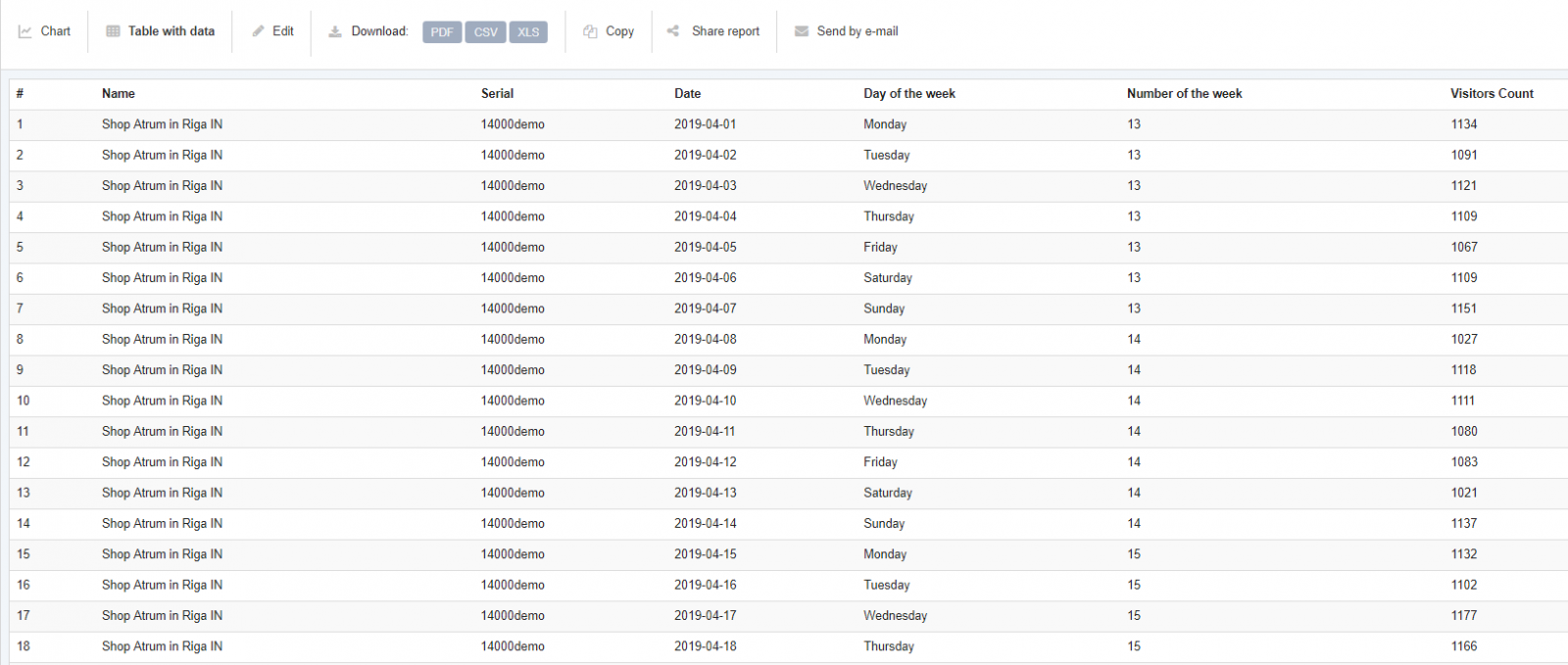
- Automated online reporting: Counts flow through the Wi-Fi gateway into the SensMax people counting software, giving managers ready-to-use hourly, daily, and weekly reports without manual spreadsheets.
Where Wi-Fi People Counters Deliver Value
Because one Wi-Fi gateway can collect readings from multiple doorway sensors across a building, this setup works well wherever teams need clear entrance statistics without complex IT projects:
- Retail stores and chains: Combine footfall counts with POS receipts to measure conversion rates, schedule extra sales associates during peak hours, and compare store performance across regions.
- Corporate workplaces and offices: Track usage in canteens, meeting areas, and shared floors to schedule cleaning services based on actual room traffic rather than fixed timers.
- Schools, libraries, and campuses: Measure hourly visitor flow in reading rooms, lecture halls, and campus entrances to plan staffing and opening hours.
- Museums and leisure venues: Monitor arrival peaks across exhibition halls and reception desks so staff can keep visitor flow smooth throughout the day.

Choosing Between Total Crossings and IN/OUT Counting
Selecting the right doorway sensor comes down to what decisions you plan to make with the data. Both models pair with the same Wi-Fi gateway and online reporting portal, so your choice depends on entrance layout and reporting needs.
Choose the unidirectional SensMax S1 if you want total passage counts at standard single-file entrances, restrooms, or secondary doors. If you need separate IN and OUT figures to track net occupancy or measure how many visitors enter versus exit at different times of day, select the bidirectional SensMax D3. For extra-wide mall openings or outdoor areas where multiple people walk side by side, overhead radar sensors are a better fit than a single doorway beam.
Key Takeaways
- A Wi-Fi people counter system pairs battery-powered infrared doorway sensors with one central Wi-Fi data gateway for fast multi-entrance setup.
- Separating the doorway sensor from the Wi-Fi connection enables up to 2 years of battery life with non-invasive mounting.
- Infrared beam counting is fully anonymous and GDPR-compliant because it captures zero images, video, or personal device data.
- Managers can choose total-crossing sensors (SensMax S1) for basic traffic trends or bidirectional sensors (SensMax D3) for separate IN and OUT counts.
Frequently Asked Questions
Do the doorway sensors connect directly to our Wi-Fi router?
No, and that is intentional for battery efficiency. The wireless sensors transmit data via long-range radio to a central SensMax SMX Data Gateway, which then connects to your existing Wi-Fi or LAN network to upload statistics online.
How long do the batteries last in wireless infrared people counters?
SensMax S1 and D3 doorway sensors operate on batteries for up to 2 years under typical conditions. Internal memory also buffers counts locally so data is preserved even if your Wi-Fi connection drops temporarily.
Are infrared people counters compliant with GDPR privacy rules?
Yes. Infrared sensors only count interruptions of a light beam across the doorway and never record video, photos, or MAC addresses from visitor phones.
How many sensors can one Wi-Fi gateway handle?
A single SensMax SMX Data Gateway can collect data from multiple wireless sensors within range across a store or building floor, simplifying multi-door rollouts and keeping network configuration straightforward.
Planning to monitor visitor traffic across your entrances? Share the number of doors, approximate entrance widths, and site type using the inquiry form below, and our team will recommend the right SensMax S1 or D3 sensors and Wi-Fi gateway setup for your locations.
Ask your question
Tell us briefly about your project - our engineers will recommend the optimal configuration and send a quote.